The Cleavage
Three possible directions, west, south and south-east. South provides a shallow garden of corals that may get impacted by tide. South-east has bigger corals and more sandy bottom at 30 meters. Ending the dive south-west of the island.
What you'll see (20)
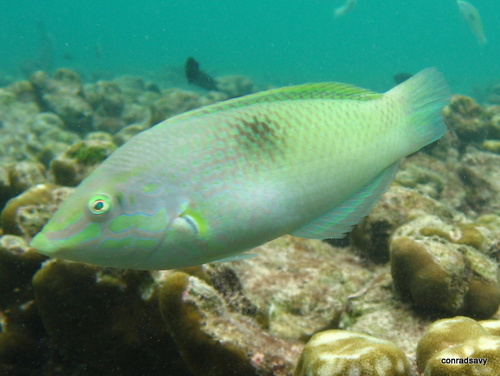 Pastel-green WrasseHalichoeres chloropterusseen 17× near here
 Three-striped WhiptailPentapodus trivittatusseen 13× near here
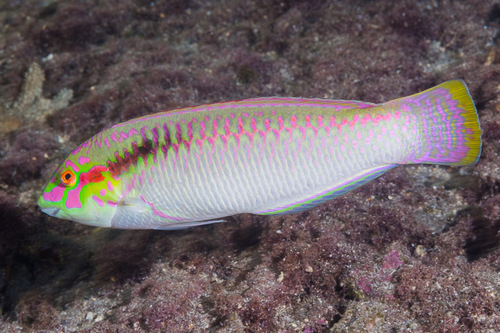 Zigzag WrasseHalichoeres scapularisseen 11× near here
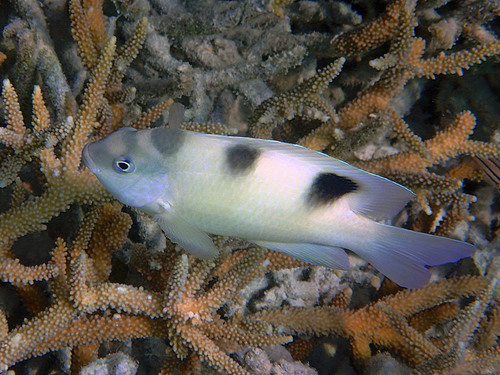 White DamselDischistodus perspicillatusseen 10× near here
 Black Longspine UrchinDiadema setosumseen 9× near here
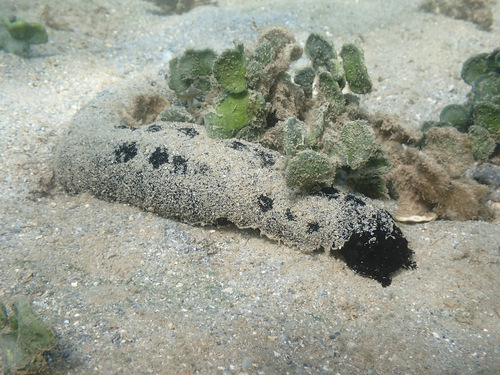 Lollyfish Sea CucumberHolothuria atraseen 7× near here
 Freckled GobyAmblygobius stethophthalmusseen 6× near here
 Scissortail SergeantAbudefduf sexfasciatusseen 5× near here
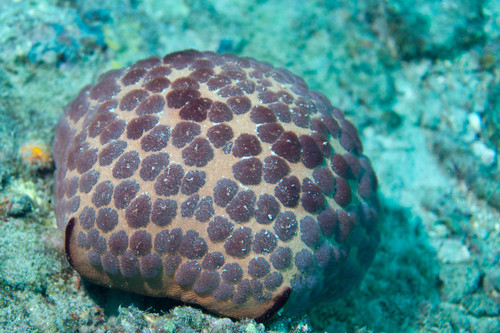 Pillow Cushion StarCulcita novaeguineaeseen 5× near here
 Anchor TuskfishChoerodon anchoragoseen 5× near here
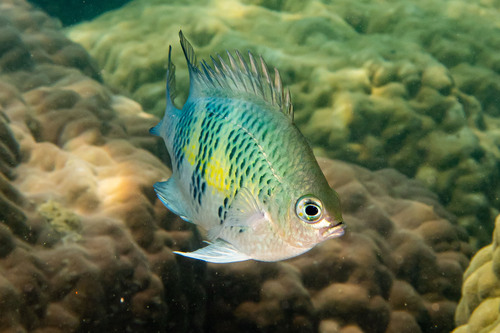 Staghorn DamselAmblyglyphidodon curacaoseen 5× near here
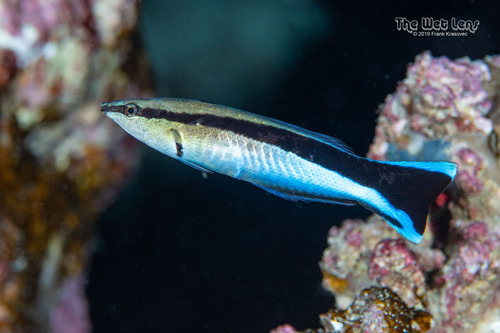 Bluestreak Cleaner WrasseLabroides dimidiatusseen 4× near here
 Ocellaris AnemonefishAmphiprion ocellarisseen 3× near here
 Whitepatch DamselDischistodus chrysopoecilusseen 3× near here
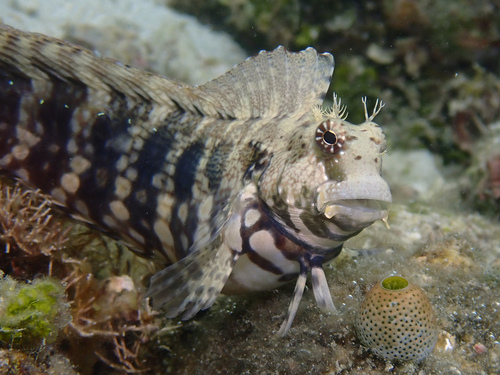 Jewelled BlennySalarias fasciatusseen 3× near here
 Speckled SandperchParapercis pacificaseen 3× near here
 Crenate Swimming CrabThranita crenataseen 3× near here
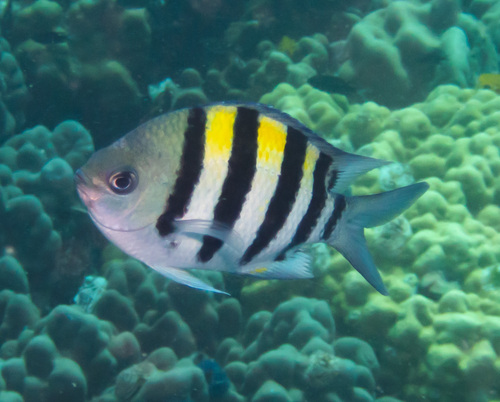 Indo-Pacific Sergeant MajorAbudefduf vaigiensisseen 2× near here
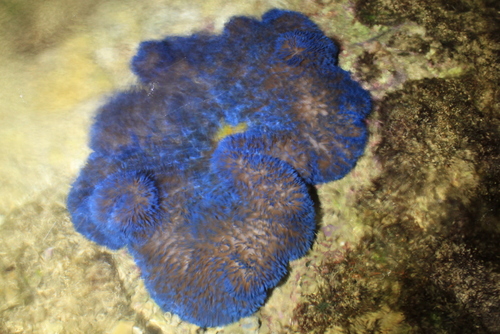 giant carpet anemoneStichodactyla giganteaseen 2× near here
 Eibl's AngelfishCentropyge eibliseen 2× near here
Dive sites and nearby places from © OpenStreetMap contributors, under the ODbL. Named reefs from Wikidata. This site is on OpenStreetMap — anyone can correct it there. Map tiles © Esri.
Sightings and photographs from iNaturalist contributors, research-grade records within 6km, under Creative Commons licences. Counts are what divers and snorkellers have bothered to log — a common fish with few records is common all the same.